Is it legal to sell homemade food in the Philippines? Yes, with conditions
Thousands of Filipinos sell lutong bahay from their kitchens every day, and the law has room for all of them. Here is where the line actually sits, what the conditions are, and how sellers move from informal to fully registered.
Updated July 10, 2026 · By the Suki Neighbors team
The short answer
Selling homemade food in the Philippines is legal, and it becomes a regulated business once it turns regular. There is no law banning home kitchens from selling food. What the law expects is that a food business, once it operates like a business, registers with the barangay, DTI, the LGU, and the BIR, and follows basic food safety rules.
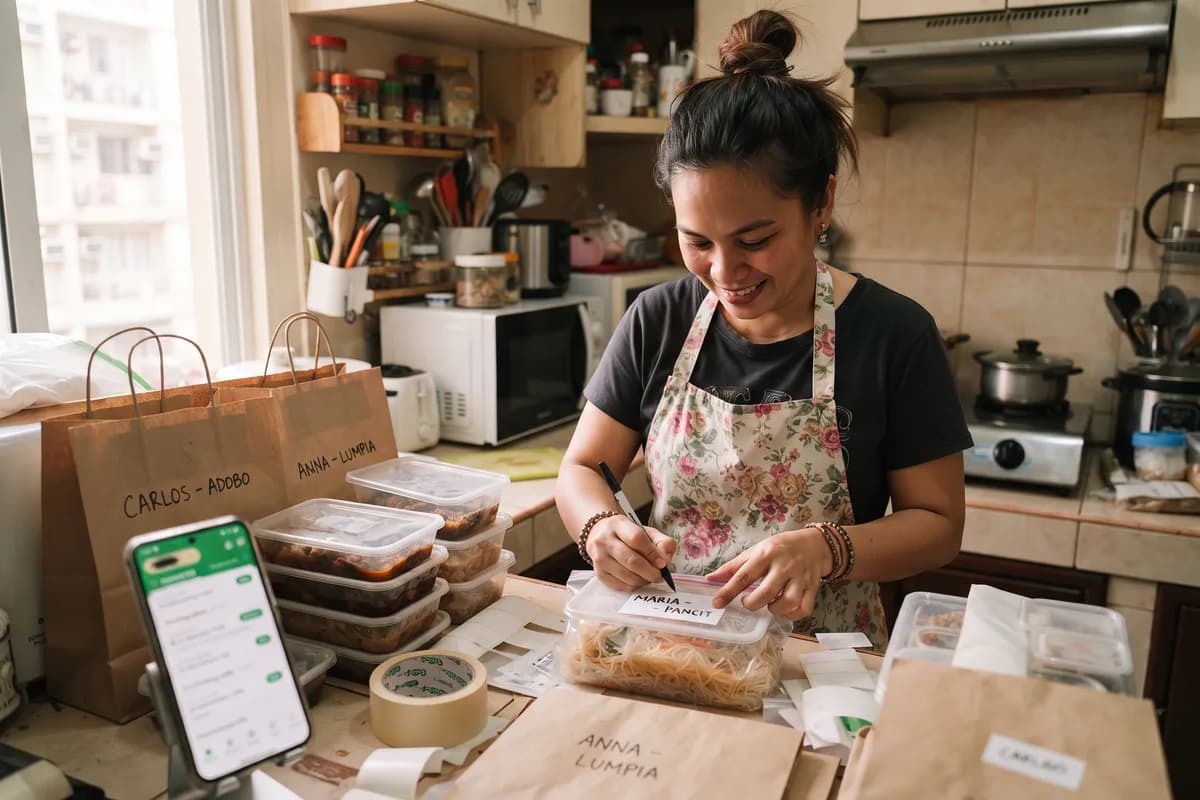
In practice that means a kusinera selling adobo packs to her building a few times a week is doing something normal and legitimate. The question is not “am I allowed?” but “which papers apply to my size?” That is a much friendlier question, and this page answers it.
When a home kitchen is fine as-is
The lightest end of the spectrum is small, direct-to-consumer, freshly cooked food: today's ulam sold to neighbors, party trays cooked to order, pandesal picked up at your door. This kind of selling sits under your LGU's rules, not the FDA's, and small occasional sellers commonly start with nothing more than a barangay clearance and clean food-handling habits.
- Small. A few orders a day, cooked in batches, no employees, no storefront.
- Direct to consumer. The person who ordered eats it. No resellers, no store shelves, no wide distribution.
- Fresh. Cooked today, eaten today. Not bottled, sealed, labeled, or shelf-stable.
Stay inside those three and your paperwork lives at the barangay hall and city hall, and even there the expectations scale with your size. Cross any of them, and you climb the ladder below.
The escalation ladder
Philippine requirements form a ladder, and you climb it as the benta grows. Each rung usually asks for the one before it, so the order matters:
- 1. Barangay clearance. The base document. Cheap, fast, from your barangay hall. Full steps in the barangay clearance guide.
- 2. DTI business name. Registers your business name online through BNRS, ₱200 to ₱2,000 depending on scope. See the DTI guide.
- 3. Sanitary permit. The permit that is actually about food: your city health office checks the kitchen and issues it. See the sanitary permit guide.
- 4. BIR registration. Once income is regular, you register as a sole proprietor and can issue receipts. Small sellers get generous treatment; the BIR guide explains the ₱250,000 shape.
- 5. FDA License to Operate. Only when you process, package, or bottle food for wide distribution. Fresh direct-to-buyer cooking never reaches this rung; the FDA guide draws the line.
The whole ladder, with costs and where to get each document, is mapped in the complete permits guide.
The enforcement reality
Nobody is raiding home kitchens over ten tubs of adobo. Enforcement in practice is complaint-driven and scale-driven: a neighbor reports a smell or a hazard, a seller grows visible enough to look like an unregistered restaurant, or the BIR notices a large online seller with no registration. Small, clean, well-liked sellers almost never meet an inspector.
That is not a reason to ignore the rules forever. Fines and closure orders are real once you are big enough to matter, and back taxes are the expensive surprise. The realistic risks, and what actually triggers them, are covered in the penalties guide. The good news: getting fully legit typically costs ₱8,000 to ₱12,000 in the first year, cheaper than one month of a food stall's rent.
One extra layer if you live in a condo
Condo corporations and HOAs add their own house rules on top of the law. Some buildings welcome home businesses, some restrict cooking for sale, and some barangays even ask for condo admin consent before issuing a clearance. If that is your situation, read selling food in a condo before you post your first listing.
Start where you are
The pattern that works: start small and informal while you test whether neighbors actually buy, then register step by step as income becomes regular. The full playbook for that first stage is in how to sell food from home. A community marketplace like Suki Neighbors fits that stage well: your buyers are your own building or barangay, payment goes straight to you, and there is no commission eating the margin while you are still small.
Registration is not just cost. A DTI certificate and receipts unlock bigger catering orders, and on Suki, registered sellers can apply for the manager-approved Official Store badge that tells the whole community you are the real thing.
This page is general information, not legal or tax advice. Rules and fees differ by barangay, city, and year. Before filing anything, verify the current requirements at your barangay hall and city hall.
Common questions
Is it illegal to sell food without a permit in the Philippines?
Selling homemade food is legal, but operating a regular food business without LGU permits can lead to fines or closure orders once you are large or visible enough to draw attention. Small occasional sellers commonly start with just a barangay clearance and register the rest as the business grows. Enforcement in practice is complaint-driven and scale-driven.
Can I sell cooked food from my house to neighbors?
Yes. Freshly cooked food sold directly to the person who eats it falls under your LGU rules, not the FDA. Start with a barangay clearance, keep the kitchen clean, and add the DTI, sanitary permit, and BIR registration as selling becomes regular. Many Filipino home sellers operate exactly this way.
Do I need FDA approval to sell homemade food?
Not for freshly cooked meals sold directly to buyers. The FDA License to Operate applies to processed, packaged, labeled, or shelf-stable food distributed widely, like bottled sauces or repacked snacks headed for store shelves. Home-cooked ulam, baked goods eaten fresh, and party trays are LGU sanitary permit territory instead.
At what point does a home food seller need to register?
The common trigger is regularity: when selling shifts from occasional batches to steady weekly income, it starts looking like a business to the barangay, city hall, and BIR. Most sellers register in order: barangay clearance first, then DTI, Mayor's permit, BIR, and sanitary permit. First-year costs typically total ₱8,000 to ₱12,000.