Food safety for home sellers: six habits that keep your suki
One bad tummy ends a home food business faster than any competitor. Trust is the real product, and it is cheap to protect. Six habits, one printable checklist.
Updated July 8, 2026 · By the Suki Neighbors team
Trust is the product
A neighbor who orders your adobo is trusting a kitchen they have never seen. Get it right and they become suki. Get it wrong once and the story travels the group chat by dinner. The good news: a home kitchen can run as clean as a commercial one, because you cook small batches for people minutes away. The sanitary permit makes it official later; these six habits are what it certifies.
Habit 1: Shop and store smart
Buy chilled and frozen items last at the palengke or grocery, get them home fast, and put them straight into the fridge or freezer: an unbroken cold chain. Then run FIFO, first in, first out. New stock goes to the back, older stock gets cooked first, and anything you freeze gets a date label so nothing mystery-ages behind the ice candy.
Habit 2: Prep clean
Keep raw and cooked worlds separate: one chopping board and knife for raw meat, another for everything ready to eat. Wash your hands for 20 seconds before cooking, after handling raw meat, and after touching your phone, cash, or your hair. Most kitchen contamination is raw chicken juice hitching a ride to something that will never be cooked again.
Habit 3: Cook to temperature, not to color
Bacteria multiply fastest between 5°C and 60°C, the danger zone. Cook poultry, and anything you reheat, to 74°C at the center: steaming hot all the way through, juices running clear. Reheat food only once, ever. Keep hot food above 60°C and cold food below 5°C, and spend as little time as possible in between.
A basic kitchen thermometer is a small one-time buy that removes all the guessing from 74°C. If you sell chicken dishes or meal prep packs every week, get one.
Habit 4: The 2-hour rule
Cooked food sits at room temperature for 2 hours, maximum. Philippine room temperature lives deep inside the danger zone, so the clock is real. Cool leftovers fast in shallow containers: food spread thin cools in minutes, while a deep pot stays warm in the middle for hours, which is exactly where bacteria want to live.
Habit 5: Pack and label
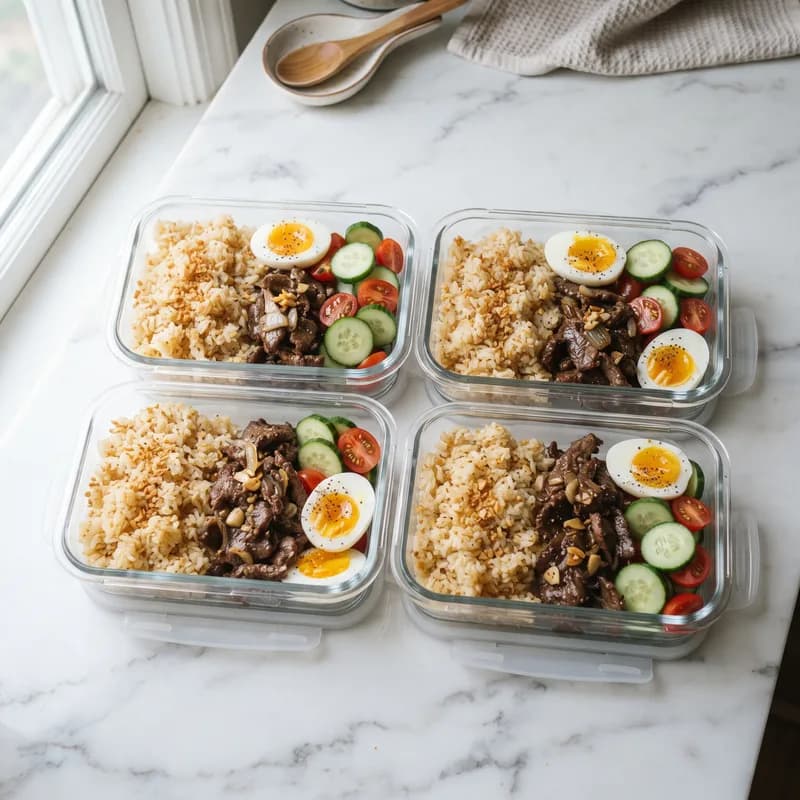
Every pack that leaves your kitchen gets a label: what it is, the date packed, and reheat instructions if it needs them. Then declare allergens whenever the food contains them: peanuts, shellfish, egg, dairy, wheat or gluten, soy. One line on the label protects your buyer and protects you.
Habit 6: Deliver fresh
Selling inside your own building is a food-safety feature: your food travels three floors, not 40 minutes of traffic. Protect that edge. Pack right before you leave, use an insulated bag for hot items, and time your cooking so ASAP orders go out at peak freshness. On Suki, listings expire after 12 hours, so everything a buyer sees was posted today, and they know it.
Tape this to the fridge
- Cold below 5°C, hot above 60°C. In between is the danger zone.
- Raw and cooked never share a board, knife, or plate.
- 20-second handwash: before cooking, after raw meat, after your phone.
- Poultry and every reheat: 74°C at the center. Reheat only once.
- Cooked food out for 2 hours max. Cool fast in shallow containers.
- FIFO: first in, first out. Date-label everything you freeze.
- Every pack labeled: contents, date packed, allergens.
- Sick today? No benta today.
When not to sell
Fever, LBM, vomiting, or an infected cut on your hands means no cooking for other people today, even with gloves. On Suki this costs you nothing: listings expire on their own after 12 hours, so a sick day just means you skip posting or hitting Relist. Telling your suki “balik ako Thursday” reads as care, not weakness.
Safe food is how your rating compounds
Buyers can rate every order within 24 hours of delivery, and those stars sit where new buyers look first. Food safety is invisible when you do it right; the rating is where it shows. A clean record of fresh, safe, on-time orders builds the most valuable thing in a building: the neighbor everyone trusts to feed them. Reply to every review, even the imperfect ones. The full seller playbook is in the seller guide.
Common questions
How long can cooked ulam sit out at room temperature?
Two hours maximum. Philippine room temperature sits inside the 5-60°C danger zone where bacteria multiply fastest. Within that window, keep hot food hot above 60°C, or cool it quickly in shallow containers and refrigerate. If food has been out longer and you are unsure, do not sell it.
Can buyers reheat my food safely?
Yes, if your label tells them how: refrigerate on arrival, reheat only once, and heat until steaming hot all the way through, about 74°C at the center. Write it on the label of any meal meant for later, like meal prep packs. Clear instructions turn a safety rule into good service.
Do I need to list allergens on home-cooked food?
Yes, every time the food contains them. The common ones to declare are peanuts, shellfish, egg, dairy, wheat or gluten, and soy. Put the line on the pack label and in your listing description. For an allergic buyer, that single line is the whole difference.
What containers should I use for selling food?
Food-grade containers with tight-fitting lids: microwavable plastic tubs for ulam and meal prep, kraft boxes with liners for baked goods. Shallow containers are best because they cool food faster and travel flat. Add the container cost into your price instead of absorbing it.