Selling food in a condo: the rules, and how to stay on the admin's good side
Someone in your building already sells adobo through the group chat. Condo food selling happens everywhere - the real question is how to do it without a letter from the admin office. Here is what house rules usually say, and the setup that keeps everyone happy.
Updated July 8, 2026 · By the Suki Neighbors team
People sell food from condos everywhere
Ride any residential elevator at lunchtime and you can smell it: sinigang on 8, cookies on 15, tapa marinating on 21. Condo kitchens feed condo neighbors every day, and most buildings live with it just fine.
The sellers who get in trouble are rarely in trouble for selling. They are in trouble for running a store: strangers past the guard, flyers in the elevator, hallway trash. Avoid those, and a quiet benta stays quiet.
Check your house rules first
Every condo runs on two documents: the master deed and the house rules. Somewhere in there sits a residential-use section, and it usually restricts three things:
- No commercial signage. No tarp on your door, no posters in the hallway.
- No customer foot traffic. Your unit cannot receive a stream of walk-in buyers like a shop.
- No business registration at the unit address. Many buildings will not let a unit serve as a registered commercial address.
Notice what is missing from that list: cooking and selling to fellow residents. Many buildings tolerate small-scale neighbor-to-neighbor selling because it touches none of those three rules. Admins act on complaints - a door-to-door benta gives nobody one.
The patterns that keep admins happy
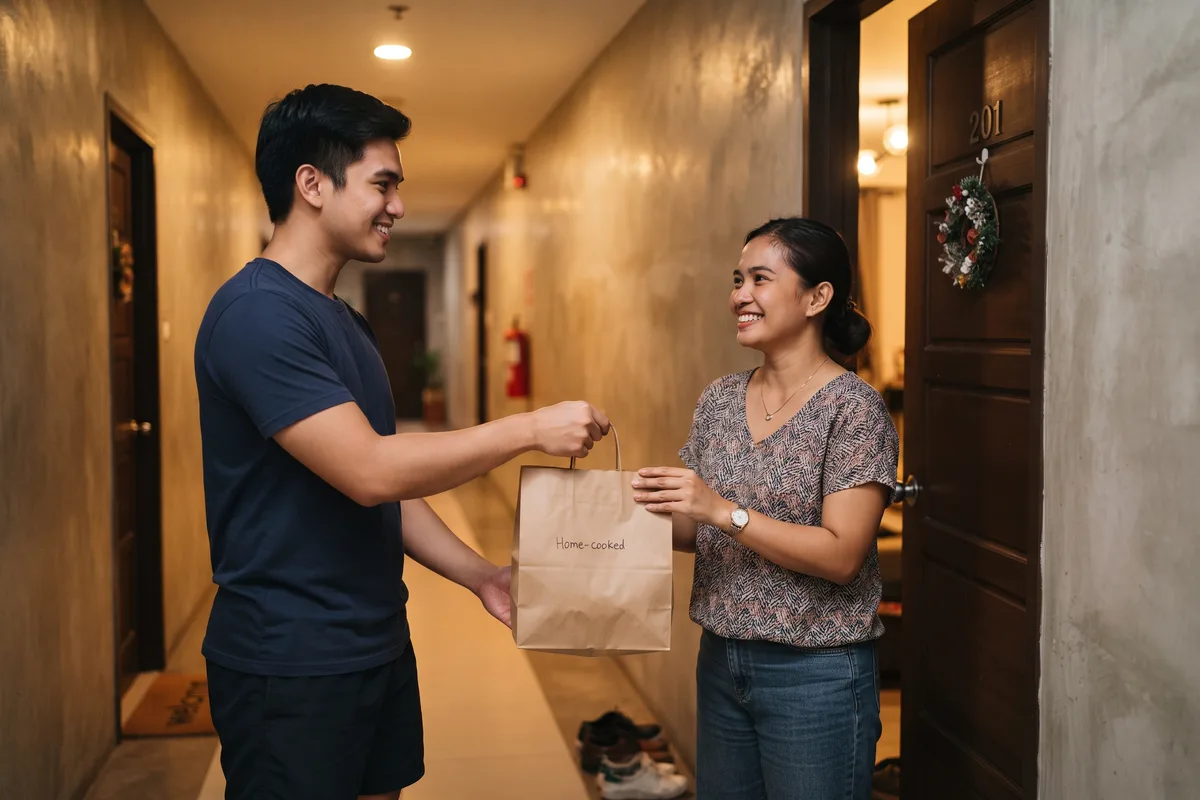
- Deliver to doors or meet at the lobby. You bring the food to buyers - never host them inside your unit.
- No signage or flyers in hallways and elevators. Your marketing lives in the group chat and the app, not on the walls.
- Manage smells and trash. Run the range hood, seal your bags, and bring packaging waste down the same day.
- Respect quiet hours. No 5 AM blender above a sleeping neighbor.
- Keep it neighbors-only. Residents buying from residents means no strangers past the guardhouse, ever.
How to ask the admin office
You do not need permission to cook. But once your benta becomes regular, one honest two-minute conversation beats months of selling with one eye on the door. Frame it the way it really is: residents buying from residents.
A script that works at the front desk: “Hi po, I am a resident at 12B. I cook meals and a few neighbors order from me. I deliver to their doors myself, nobody visits my unit, there is no signage, and it is residents-only through a private members-only app. Is there anything in the house rules I should follow?”
Most admins answer with conditions, not a no: use the service elevator, keep deliveries off the amenity floors, handle trash properly. Write the conditions down and follow them exactly - that paper trail protects you if a grumpy neighbor complains later.
Why members-only beats public selling in a condo
Those three classic restrictions all protect the building from outsiders and clutter. Public selling fights them by design: a Marketplace post invites the whole city, and every delivery-app order sends a new rider past the guard.
A private Suki community is built the other way around:
- Invite code required. Membership maps to the building, and the manager approves every join request.
- Members-only ordering. A buyer must join the community before they can check out.
- No strangers enter. The seller lives here, the buyer lives here, the food moves a few floors.
- Manager moderation. House rules members agree to, plus warn and suspend powers - often held by an admin or HOA officer.
That structure is why buildings that frown at “online selling” often say yes to this. The admin-side case is laid out in Suki for condo communities.
When you need a business address (and when you don’t)
Home cooks selling small batches do not need a storefront address. On Suki, the home-made seller type asks for none, and early-stage paperwork (barangay clearance, then DTI and BIR as you formalize) matches that scale.
Registered businesses are different. Carinderia and store seller types require a storefront address, and a Mayor’s permit ties a business to a specific address - the exact thing many house rules prohibit inside units. At that stage, talk to the admin or register at a commercial address. The permits guide walks the whole ladder.
House rules differ building to building, and permit requirements vary by LGU. This is general information, not legal advice - your master deed, admin office, and city hall have the final word.
If the rules say no
Some buildings are strict, and fighting the HOA is a losing business plan. You still have three graceful moves:
- Go pickup-only, lobby edition. Set the lobby as your pickup spot and hand everything over at fixed times. One trip down, zero hallway traffic.
- Sell in a nearby community. Your store lives in one community, and it does not have to be your own tower. Set up in the village next door or a sister building that allows it.
- Work with the HOA. Propose a pilot: members-only, no foot traffic, moderated by the board itself. Revisit after a month of zero complaints.
Common questions
Is it legal to run a food business from a condo unit?
Small-scale home cooking sold to neighbors is a normal, legitimate sideline in the Philippines, and no national law bans it. What binds you is your building's master deed and house rules, which typically restrict signage, walk-in customers, and registering a business at the unit address. Check those first, then add barangay clearance and other LGU permits as you grow.
Will the admin shut me down?
Admins respond to complaints, not to cooking. With no signage, no strangers entering, smells and trash controlled, and sales kept to fellow residents, there is usually nothing to act on. Telling the admin office early how you operate removes the surprise factor entirely.
Do buyers come to my unit?
Only if you choose pickup and set your door as the spot. Most condo sellers deliver to the buyer's door instead, or set a lobby pickup point at fixed times. On Suki, each order is fulfilled your way: ASAP delivery, scheduled delivery, or pickup at the location you choose.
Does Suki help with building rules?
The structure itself helps: communities can be private with an invite code, ordering is members-only, and no outside customers ever enter the building. Community managers, often an admin or HOA officer, set house rules members must agree to and can warn or suspend sellers who break them. It is condo selling that building management can actually supervise.