Is there a carinderia app in the Philippines?
Filipinos have been asking for one for over a decade. Here is what actually exists in 2026, why every past attempt died, and how a carinderia gets online free today.
Updated July 10, 2026 · By the Suki Neighbors team
The short answer
There is no dedicated, nationwide carinderia app in the Philippines - every past attempt to build one died. What exists in 2026 is the community marketplace model: free, neighborhood-locked platforms like Suki Neighbors where a carinderialists today's ulam to its own barangay or building, keeps 100% of every sale, and gets paid directly by GCash, Maya, or cash.
People have wanted this for years
The demand is not hypothetical. There is a Change.org petition literally titled “Carinderia Suki - bring carinderias and panaderias online through a mobile app.” A Kickstarter for a carinderia app launched and died back in 2014. Hackathon teams have pitched carinderia finders for years. During the pandemic, several LGUs piloted “e-palengke” platforms in 2020 to bring market vendors and carinderias online - most quietly shut down within a year or two.
Meanwhile, the big delivery apps never picked up the slack, because a typical carinderia cannot join them: GrabFood and Foodpanda require business registration, BIR papers, and permits, then take roughly 25-30% commission per order. We break that down in can home cooks join GrabFood or Foodpanda.
Why past carinderia apps failed
The pattern across the dead attempts is the same: city-wide aggregation economics do not work for ₱60 ulam.
- The margins cannot carry a platform. A carinderia plate sells for ₱50-₱90. Take a delivery-app-style 25-30% commission and the owner loses money; pass it to the buyer and the plate stops being carinderia-priced. There is no cut to take.
- Delivery costs more than the food. Sending a rider 5 kilometers for a ₱70 order means the delivery fee doubles the bill. Carinderia food only makes economic sense within walking distance.
- City-wide discovery solves the wrong problem. Nobody browses carinderias across town. People eat at the one near their home, office, or terminal. An app aggregating 500 carinderias city-wide offers reach that neither side needs.
- Menus change daily.A carinderia's ulam lineup changes every morning and sells out by afternoon. Static app menus rot instantly, and past platforms had no answer for that.
The model that works: community-locked, zero commission
Flip every failed assumption and you get the model that fits. Instead of aggregating city-wide, lock each marketplace to one barangay, village, or building - the actual walking-distance radius where carinderia economics work. Instead of commission, charge nothing and let buyers pay the seller directly, so the ₱60 plate stays ₱60. Instead of static menus, listings that auto-expire after 12 hours, so the feed always shows what was actually cooked today - which matches exactly how a carinderia operates.
That is what Suki Neighbors is. It was built for home cooks and carinderias in the same neighborhood feed, with live stock counts, pre-orders with cutoffs, buyer ratings, and a manager-approved Official Store badge that marks the established physical stores in the community. Compare it with the delivery-app model in Suki vs delivery apps.
How a carinderia gets online free
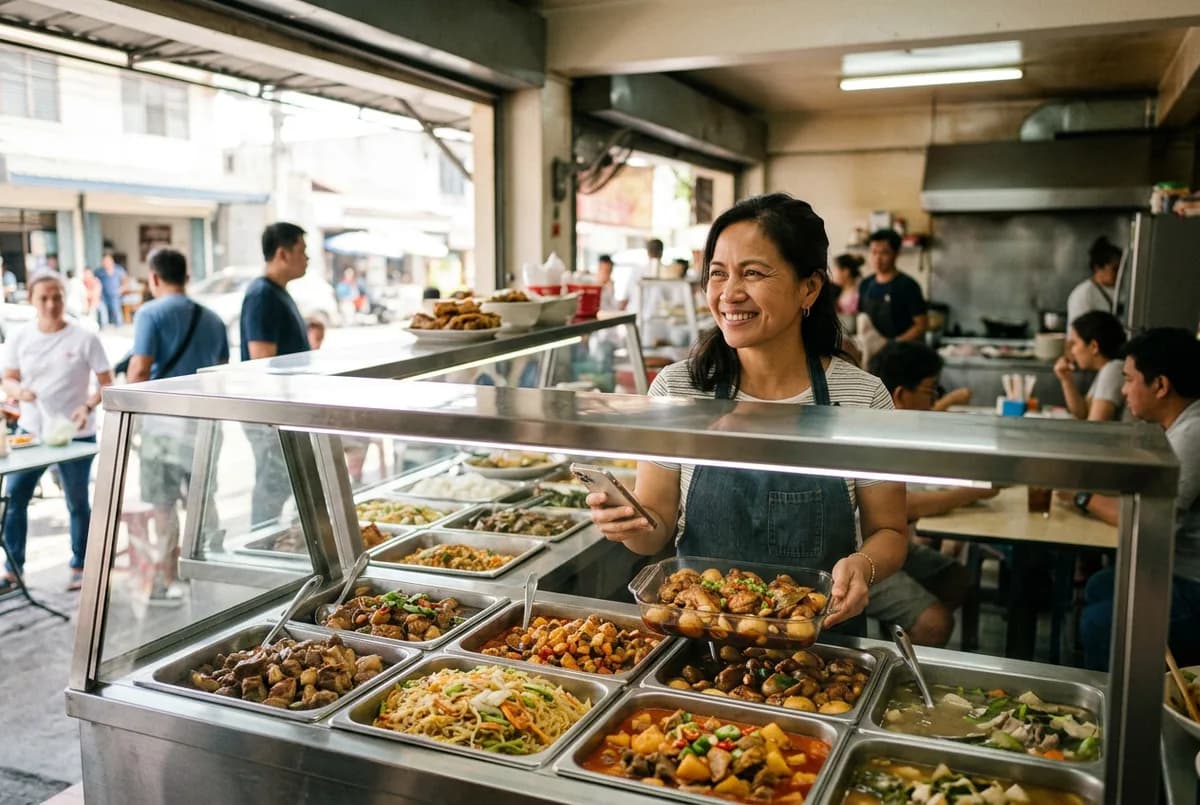
No developer, no fees, no app store. A carinderia owner opens the store setup page, creates a store in minutes, joins the barangay or building community, and posts today's ulam with photos, prices, and stock counts. Buyers order through a real checkout and pay directly - GCash QR at the counter works too. Suki runs as an installable web app on any phone. The full owner playbook, including pre-orders and the Official Store badge, is at Suki for carinderia owners.
And if your barangay has no community yet, that is the other half of the answer: anyone can pioneer a community marketplace free and become its manager - which is usually how a neighborhood's carinderias come online together.
Common questions
Is there an app for carinderias in the Philippines?
There is no dedicated nationwide carinderia app - past attempts, including a 2014 Kickstarter and 2020 LGU e-palengke pilots, all shut down. What works in 2026 is the community marketplace model: Suki Neighbors lets a carinderia list today's ulam free to its own barangay or building, with zero commission and direct payment.
Why can't carinderias just join GrabFood or Foodpanda?
Two walls: requirements and economics. Both platforms require DTI or SEC registration, BIR papers, and permits that most carinderias do not have. Then commission runs roughly 25-30% per order, which a ₱60-₱90 plate cannot absorb. The delivery-app model was built for restaurants, not carinderias.
How much does it cost for a carinderia to get on Suki Neighbors?
Nothing. Creating a store, joining a community, posting listings, and receiving orders are all free, with zero commission - the carinderia keeps 100% of every sale. Buyers pay the owner directly via GCash, Maya, bank transfer, or cash. There is no catch fee later; the platform simply does not touch the money.
How does a daily-changing carinderia menu work on an app?
On Suki Neighbors, listings automatically expire 12 hours after posting, which matches carinderia rhythm exactly: post the day's ulam in the morning, stock counts run down live as orders come in, sold-out dishes hide automatically, and tomorrow you relist in one tap with whatever you actually cooked.
What was the Carinderia Suki petition?
A Change.org petition titled 'Carinderia Suki - bring carinderias and panaderias online through a mobile app', asking for exactly this kind of platform. It is one of several public signals of demand over the past decade, alongside a failed 2014 Kickstarter, hackathon projects, and pandemic-era LGU e-palengke pilots.