What is a carinderia? The eatery that feeds the Philippines
Before food apps, before fast food, before malls, there was the carinderia. Here is what it is, how it works, and why it refuses to die.
Updated July 10, 2026 · By the Suki Neighbors team
The definition
A carinderia is a small, family-run Filipino eatery that serves ready-cooked ulam from open trays at a counter. Customers point at what they want, pair it with rice, and eat on the spot or take it home. A full meal typically costs ₱50 to ₱80, which is why the carinderia remains the everyday restaurant of working Filipinos.
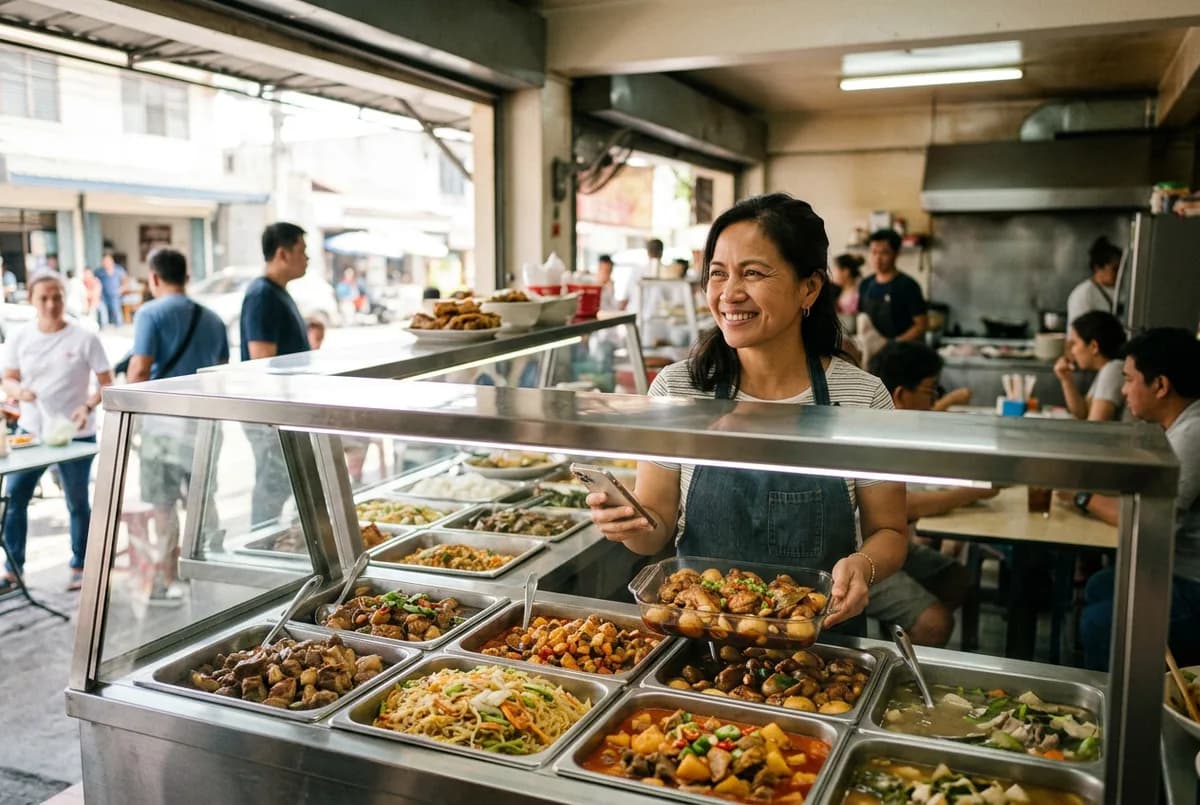
You will find one near every jeepney terminal, palengke, school gate, construction site, and office back street in the country. The spelling wobbles - carinderia, karinderya, karinderia - and the exact origin of the name is debated, so nobody owns it. The institution itself is unmistakable: glass display case, steel trays, a kaldero of rice, and someone's nanay or tita behind the counter who has been cooking since before sunrise.
How ordering works: the turo-turo counter
Carinderias serve in the turo-turostyle, literally “point-point.” The day's dishes sit cooked and visible in trays behind glass: adobo, menudo, pinakbet, ginisang monggo, fried fish, dinuguan if you are lucky. You point, the server plates it over rice, you pay, you eat. No menu, no waiting for the kitchen, no surprises about what the food looks like, because you are looking straight at it.
The rhythm is fixed: cook a batch in the morning, sell it through lunch, mark down or take home whatever is left by late afternoon. What you see in the trays was cooked today, and when a tray is empty, that dish is done until tomorrow.
What a carinderia meal costs
The core transaction is one ulam plus rice for roughly ₱50 to ₱80, depending on the dish and the city. Vegetable dishes sit at the low end, meat dishes at the top, and an extra scoop of rice adds ₱10 to ₱15. That price point is the whole point: a tricycle driver, a student, and an office worker can all eat a real cooked meal for less than the cheapest fast-food combo.
Why the carinderia never dies
Fast-food chains, convenience stores, and delivery apps have all been predicted to kill the carinderia. None have. The economics explain why:
- Almost zero overhead. Most carinderias run out of the family home or a rented stall. No franchise fee, no marketing budget, family labor instead of payroll.
- Batch cooking beats cooked-to-order. One kaldero of adobo feeds forty customers. Cost per plate drops in a way no made-to-order kitchen can match.
- It sells lutong bahay flavor at street prices. The food tastes like home because it is cooked the way home cooks cook, just in bigger pots.
- Suki economics. Regulars come back daily, so revenue is predictable and word of mouth does the advertising.
A carinderia that clears even a modest margin per plate, forty plates a day, feeds its own family and often sends the kids to school. It is one of the most durable small businesses in the Philippines, which is also why it is one of the most common - and why formalizing one is straightforward: the permits are the same ones any small food business needs.
Carinderia vs turo-turo vs restaurant
People use carinderia and turo-turo interchangeably, but they name different things: the carinderia is the establishment, turo-turo is the serving style it uses.
| Carinderia | Turo-turo | Restaurant | |
|---|---|---|---|
| What it names | The small eatery itself | The point-at-the-trays serving style | A formal dining establishment |
| When food is cooked | Batch-cooked that morning | Already cooked, on display | Cooked to order |
| How you order | Point at the trays | Point at the trays | Menu, waiter, kitchen |
| Typical meal price | ₱50-₱80 with rice | Same - it is how carinderias serve | ₱150 and up |
The carinderia, moving online
The one thing the carinderia never had is reach beyond foot traffic. Delivery apps charge commissions that erase a ₱65 meal's margin entirely, so most carinderias stayed offline. Community marketplaces change that math: on Suki Neighbors, a carinderia can post today's trays to its own neighborhood with zero commission and take orders before lunch. If you run one, see the carinderia owners page, or read why past carinderia app attempts failed where community-locked ones work.
Common questions
What is a carinderia in the Philippines?
A carinderia is a small, usually family-run Filipino eatery serving pre-cooked dishes (ulam) from open trays at a counter. Customers point at what they want, eat it with rice, and pay around ₱50 to ₱80 per meal. It is the everyday, affordable restaurant of Filipino neighborhoods.
What is the difference between a carinderia and a turo-turo?
A carinderia is the establishment; turo-turo ('point-point') is the serving style it uses, where customers point at cooked dishes on display. Nearly every carinderia serves turo-turo style, which is why the two words are often used interchangeably, but one names the place and the other names the method.
How much does a carinderia meal cost?
A typical carinderia meal - one serving of ulam plus rice - costs about ₱50 to ₱80 depending on the dish and location. Vegetable dishes are cheaper, meat dishes cost more, and extra rice usually adds ₱10 to ₱15. It remains one of the cheapest full cooked meals in the Philippines.
Is a carinderia a profitable business?
Yes, when run lean. Carinderias survive on low overhead (home-based or small stall, family labor), batch cooking that lowers cost per plate, and loyal suki customers who return daily. Many carinderias support entire families. Margins per plate are small, so volume and repeat customers are what make it work.