Suki Neighbors vs food delivery apps: which one fits you?
Delivery apps move food across a city with rider fleets. Suki moves food across your building, neighbor to neighbor. Here is the honest comparison, including where the apps genuinely win.
Updated July 8, 2026 · By the Suki Neighbors team
Different tools for different jobs
A delivery app is a city-wide machine: thousands of restaurants, a rider fleet, and an algorithm deciding who sees you. It is built for registered restaurants chasing volume from strangers.
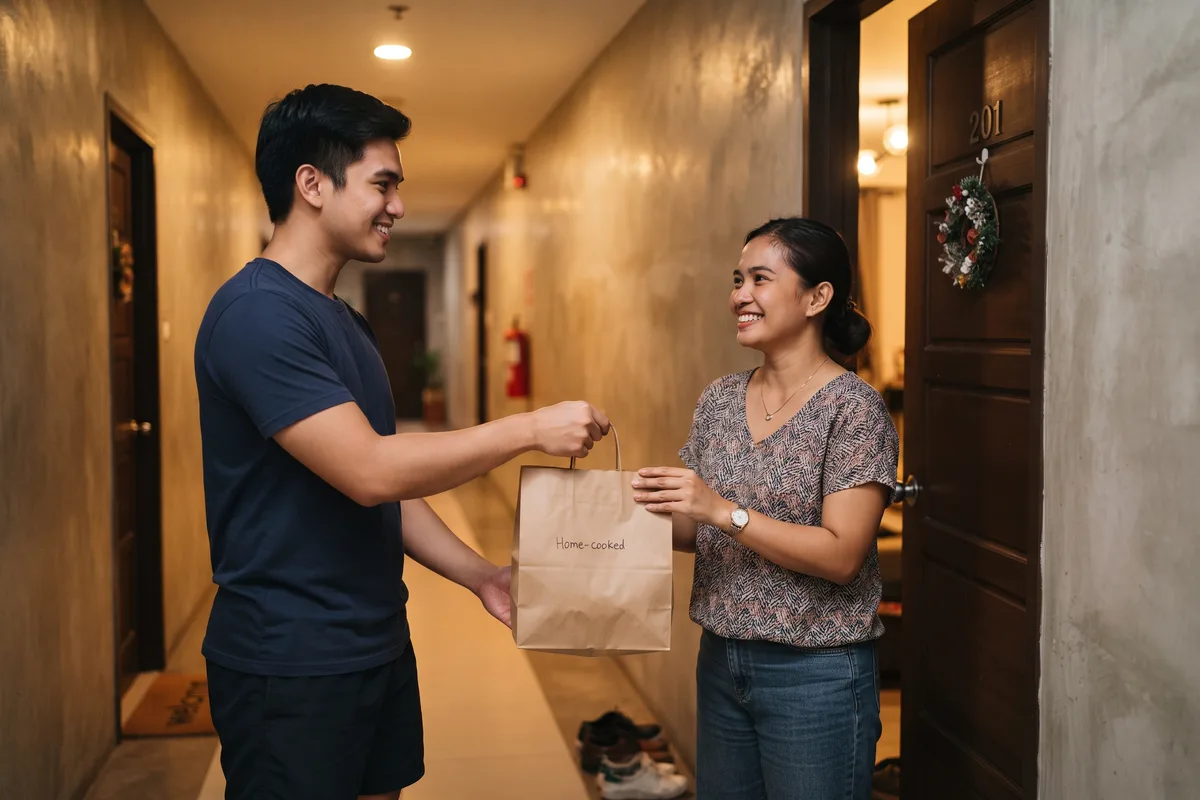
Suki is the opposite shape. Each marketplace is locked to one condo, village, or barangay. The buyers are your neighbors, the seller is the kusinera three floors up, and the delivery is an elevator ride. Neither tool does the other’s job.
Where a home seller loses on a delivery app
- Commission on every order. Marketplace commissions are commonly cited at 15-30% industry-wide. On a ₱150 ulam order, that is ₱22 to ₱45 gone before you buy a single container.
- You compete with the whole city. Your adobo sits in the same search results as every chain and every ghost kitchen in town, all with bigger photos budgets and paid placement.
- Onboarding built for restaurants. The apps expect a registered business with permits, a fixed menu, and staff. A home cook selling 15 servings of kare-kare on Saturdays was never the target user.
Where delivery apps genuinely win
Honesty first: if you want a milk tea at 11 PM from a shop across town, Suki cannot help you. Delivery apps win on city-wide reach, professional rider fleets, and discovery by strangers who will never live in your building. A registered restaurant chasing volume across the metro gets real value for the commission. That is the job the apps were built for, and they do it well.
Side by side
| Delivery apps | Suki Neighbors | |
|---|---|---|
| Who buys | Anyone in the city, mostly strangers | Your neighbors - members of your community |
| Commission | Commonly cited at 15-30% per order | Zero. You keep 100% of every sale |
| Delivery | Rider fleets across the city; fees scale with distance | Seller hands it over, or the buyer picks up - a few floors, not a few barangays |
| Who it's built for | Registered restaurants with menus, staff, and volume | Home cooks, bakers, carinderias, and small stores |
| Payments | Processed by the platform, remitted to you on a schedule | Buyers pay you directly: GCash, Maya, bank, or COD. Suki never holds money |
| Trust | Star ratings from strangers | Ratings from neighbors you will see in the elevator, plus Verified and Official Store badges |
| Cost to start | Business requirements and onboarding before your first sale | Free. Sign up, post, sell today |
For buyers: what changes
On Suki, the price you see is the seller’s price. No platform fees, no markups, no small-font charges at checkout - you pay the seller directly, the way you would at her door. And the food was cooked today, a few floors away, by someone whose name you know.
On a delivery app, you can get almost anything in the city brought to you, and that convenience is real. But the fees stack, and the person cooking will never know your order from the next one.
The use-both play for sellers
This is not either-or. If you run a registered food business, keep the apps for city reach - that is what the commission buys. Then open a Suki store for your own building or barangay, where the margins stay whole. Post daily, and every order from a neighbor pays you the full amount. The home seller guide shows how the channels stack.
The deeper difference
Every delivery-app order routes money through a platform and across a city. Every Suki order is a neighbor’s income: the kusinera on 12 funding tuition, the retired cook on 8 with the best lumpia in the building. The money stays inside the community, and so does the relationship. That is the part no rider fleet can deliver.
Common questions
Is Suki Neighbors a delivery app?
No. Suki is a community marketplace: a storefront for one condo, village, or barangay where neighbors buy directly from neighbor sellers. There are no riders and no commission; sellers hand orders over themselves, or buyers pick up.
How do sellers deliver without riders?
Distance does the job. Buyer and seller live in the same building or village, so the seller walks the order over, or the buyer collects it at the seller's door at the agreed time. Pickup is always free, and sellers set their own delivery fee, if any.
Why is Suki free when delivery apps charge commission?
Delivery apps fund rider fleets, payment processing, and city-wide operations, so they take a cut. Suki is a lean web app, communities are locked to one building or village, and buyers pay sellers directly - so there is no fleet to fund and no payment to process. That structure is why zero commission works.
Can I use Suki outside my community?
You can join up to 3 communities, and your feed combines all of them. But each marketplace is community-locked and ordering is members-only, so you buy where you are a member. That is the point: neighbors selling to neighbors, not the whole city.