How to sell food to your neighbors (your building is a market)
The best market for a home cook is not the internet. It is the two hundred households above, below, and beside you - people you can reach in an elevator ride, who eat three times a day, and who would rather buy from 12B than from a stranger. Here is how to start, and how to do it without becoming the annoying seller in the group chat.
Updated July 10, 2026 · By the Suki Neighbors team
Your building is a market
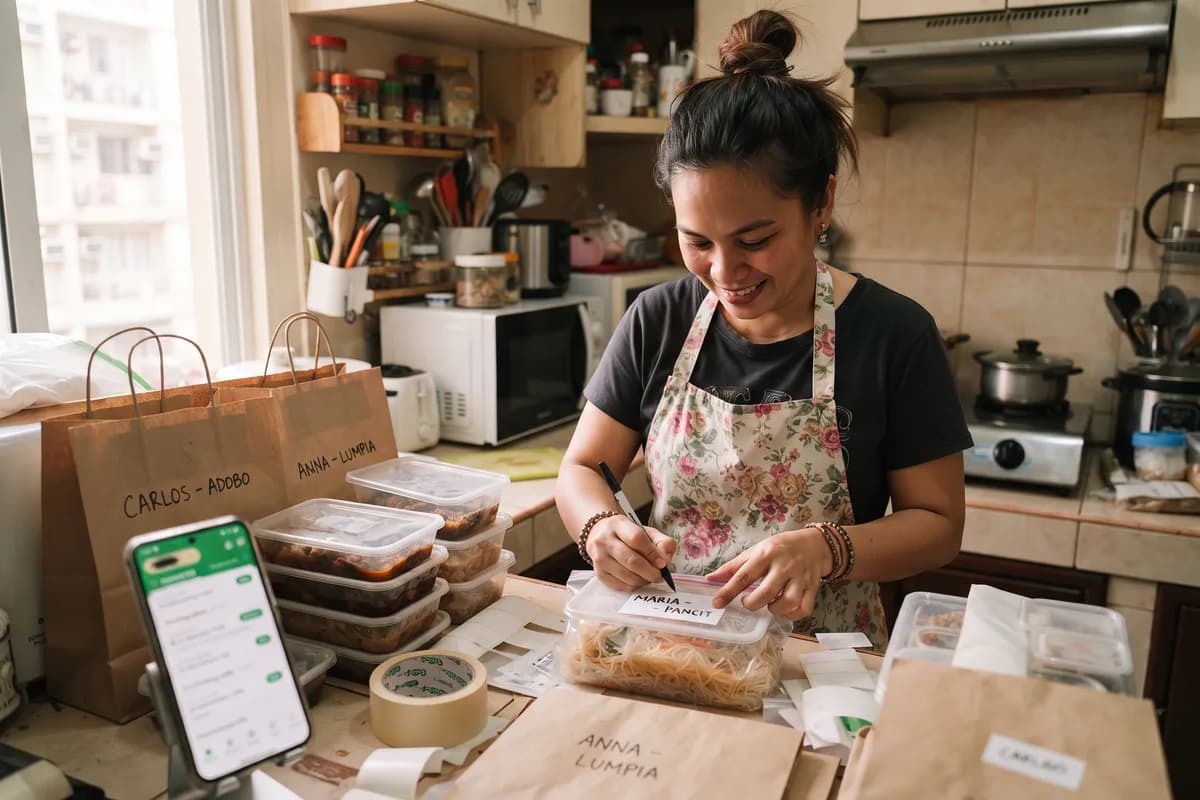
Selling food to your neighbors means treating your own condo, village, or barangay as your marketplace: you cook at home, neighbors order, and you hand the food over unit to unit or at the lobby. No riders, no shipping, no commission - just kapitbahay buying from kapitbahay. It is the oldest business model in the Philippines, upgraded.
Three structural advantages make it unbeatable for a home cook:
- Zero delivery cost. Your delivery radius is an elevator or a two-minute walk. No rider fees eating your margin, no packaging built to survive a motorcycle, no cold food arriving 45 minutes late. The dish lands exactly as it left your kitchen.
- Same-day trust. A stranger on a delivery app needs ratings, photos, and a leap of faith. A neighbor already knows you - your face from the hallway, your kids from the pool, your name from the group chat. Trust that takes an online store months arrives here on day one.
- Repeat buyers by default. Your customers do not scroll away. They live here, they get hungry every day, and once your adobo becomes their Tuesday habit, they are yours until you disappoint them. Retention is the whole game - the suki playbook covers it in depth.
The math is friendly too. A building with 200 units needs maybe 15 to 20 regular buyers to make a benta seriously worth the effort - that is a 10% conversion of people who already walk past your floor daily.
How to start: small, sharp, consistent
- 1
Run a taste-test batch
Before selling anything, cook one batch and give portions to 5 to 8 neighbors free, with one ask: honest feedback. This does three jobs at once - it pressure-tests the recipe, seeds your first word-of-mouth, and makes your first sales post land on people who already know the food is good. - 2
Pick one dish and do it well
Resist the 12-item menu. One dish, perfected and repeatable, beats variety every time: your puhunan stays small, your quality stays consistent, and neighbors learn exactly what you are known for. “The lumpia on 12” is a brand; “the unit that sells everything” is noise. Price it properly from day one with the costing guide - underpricing is the most common first mistake. - 3
Set a posting rhythm and keep it
Consistency converts curiosity into habit. Pick your days - say, Tuesday and Friday lunches - and post every one of them, same time, no skips. Neighbors start planning around you: “Friday na, order tayo kay 12B.” An erratic seller stays a novelty; a rhythmic one becomes infrastructure. - 4
Deliver like a pro from order one
Sealed packaging, the promised time, a message when you are on the way. In a building, your reputation compounds fast in both directions - one soggy, late order gets discussed at the same speed as one great one.
Etiquette: the unwritten rules of selling where you live
Selling to neighbors has one risk online selling does not: you cannot log off from these customers. You will share an elevator with them tomorrow. The etiquette rules exist to protect that relationship:
- Do not spam the group chat.One post per selling day, at mealtime, with a photo and a price. Not five reminders, not replies bumping your own post, not tagging people. The fastest way to lose a building's goodwill is to make its chat feel like your billboard - it is the core failure mode described in why Viber buy-and-sell groups fail.
- Quality over variety. When orders pick up, the temptation is to add dishes. Add capacity instead. Every new dish multiplies your prep complexity and dilutes the consistency that made people order in the first place. Expand the menu only when the flagship runs itself.
- Honor every commitment. If you post 20 servings, have 20. If you say 11:30, arrive 11:30. Neighbors forgive a sold-out post; they do not forget a confirmed order that never came.
- Stay inside the building's rules. No hallway selling, no flyers, smells and trash managed. The details live in the condo selling guide, and when your benta becomes regular, a short note to the admin keeps everything smooth - template in the permission letter guide.
From group chat to an organized storefront
The group chat is where neighbor-selling starts, and where it hits a ceiling. Your post is buried within minutes. Orders arrive as a mix of replies, DMs, and “seen” with no follow-up. Nobody knows what is still available, so you answer “may lumpia pa ba?” fourteen times. Payment proof is a screenshot you squint at. And every joy reserver who ghosts costs you real food.
An organized storefront fixes the mechanics without changing the relationship. On Suki Neighbors, your building gets its own members-only marketplace: listings carry live stock counts that hit Sold out automatically, everything on the feed was posted within the last 12 hours, orders land in a queue instead of a chat scroll, and buyers pay you directly - GCash, Maya, bank, or COD - with zero commission. Neighbors who follow your store get notified the moment you post, which quietly replaces the group-chat reminder you were never supposed to send. The full walkthrough is in how to sell on Suki, and if your building has no community yet, you can pioneer one and run it yourself.
Keep posting in the group chat - once per selling day, as etiquette allows - but let the link do the work: the post announces, the storefront takes orders, tracks stock, and remembers who paid.
Common questions
How do I start selling food to my neighbors?
Start with a free taste-test batch for 5 to 8 neighbors, pick one dish you can make excellently and repeatedly, then post on a fixed rhythm - for example every Tuesday and Friday lunch. Deliver sealed and on time from the first order. Consistency, not variety, is what turns first buyers into weekly regulars.
Is it okay to sell food in our condo or village group chat?
Usually yes, if you follow the etiquette: one post per selling day at mealtime, no repeated bumps or tagging, and no hallway or common-area selling. Check your community's group rules and your building's house rules first. Group chats work for announcing; the order-taking itself is what outgrows them fastest.
How many customers can I realistically get in one building?
A 200-unit building typically holds enough demand for 15 to 20 regular weekly buyers, which is a real business for a home cook: at two orders a week of around ₱150, that is ₱4,500 to ₱6,000 weekly. Growth comes from word of mouth inside the building, so quality and reliability compound quickly.
Why sell to neighbors instead of on a delivery app?
Delivery apps charge commissions around 25 to 30 percent, require business registration most home cooks do not have yet, and put you in front of strangers. Neighbors cost nothing to reach, already trust you, and reorder by habit. You keep 100 percent of every sale and the food arrives fresh, minutes after cooking.