7 foodpanda alternatives for home food sellers in the Philippines
Most home cooks cannot join foodpanda anyway - it requires business registration and permits. Here are the seven channels that actually work for a home kitchen, compared on fees, reach, and effort.
Updated July 10, 2026 · By the Suki Neighbors team
Why home sellers need alternatives at all
The best foodpanda alternatives for home sellers in the Philippines are channels that accept individuals: your own Facebook page, FB Marketplace, Viber and group chats, TikTok or Instagram DMs, a physical stall, or a community marketplace like Suki Neighbors. Foodpanda and GrabFood require a registered business, so most home cooks cannot join either one.
That requirement is the quiet gatekeeper. Both platforms typically ask for DTI or SEC registration, BIR papers, and permits before onboarding - the full list is in can home cooks join GrabFood or foodpanda. Until you register, the question is not “which delivery app is best” but “which individual-friendly channel is best.” Here are the seven, honestly.
The 7 alternatives
1. GrabFood
The like-for-like alternative: similar commission range (industry chatter puts it around 25-30%, varying by contract), similar rider fleet, similar city-wide reach. The same wall applies - it onboards registered businesses, not individuals. If you do register, running both apps is common. Best for: registered kitchens chasing metro volume, not home cooks.
2. Your own Facebook page
Free, zero commission, and you own the audience. The cost is effort: constant posting to beat the algorithm, answering every DM, and running your order list from chat threads and screenshots. Reach grows slowly without paid ads. Best for: cooks who enjoy posting and want a brand beyond the neighborhood.
3. Facebook Marketplace
Free listings in front of strangers city-wide. But it was built for secondhand goods, not ulam: no food categories that build trust, meetup logistics with people you have never met, and scam exposure on both sides. The full breakdown is in Suki vs Facebook Marketplace. Best for: shelf-stable products like frozen food or baked goods where a meetup makes sense.
4. Viber and group chats
The default channel of PH condos and villages: free, zero commission, buyers who live minutes away. The format is the problem - posts get buried in minutes, orders get seen-zoned, there is no stock visibility, and joy reservers face no accountability. Why Viber buy-and-sell groups fail covers each failure mode. Best for: sellers already embedded in an active group, as a starting point.
5. TikTok and Instagram DMs
Post the cooking video, take orders in DMs. When a video hits, demand spikes for free - real reach, no commission. But DMs are an even worse order system than group chats, the audience is scattered across the city (delivery becomes your problem), and reach is a lottery. Best for: photogenic products - baked goods, kakanin, dessert boxes - as a discovery layer on top of another channel.
6. A physical carinderia or stall
The original alternative: rent a spot, cook, sell to foot traffic. Zero platform fees but real fixed costs - rent, utilities, permits - and you are tied to the location all day. Best for: cooks ready to go full-time with capital for rent and permits.
7. A community marketplace (Suki Neighbors)
A marketplace locked to one building, village, or barangay: free, zero commission, and open to individuals - no business registration required to start. Listings sit in a browsable feed with live stock counts, orders land in a queue instead of a chat thread, and buyers pay you directly by GCash, Maya, bank, or COD. The tradeoff is deliberate: your reach is your community, not the city. Best for: home cooks whose buyers are their neighbors - which is most home cooks.
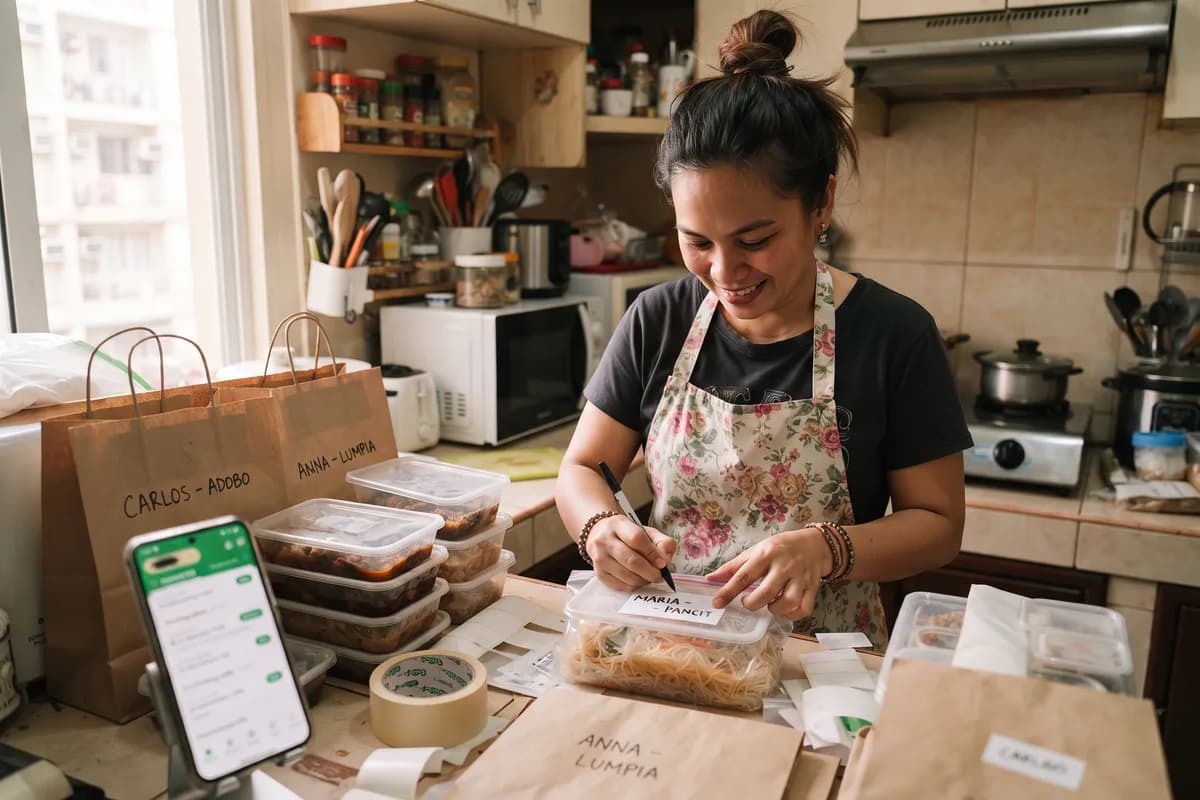
All seven, side by side
| Channel | Fees | Reach | Effort | Best for |
|---|---|---|---|---|
| GrabFood | Commission, typically 25-30% range | City-wide strangers | High to join (registration), low to run | Registered kitchens chasing volume |
| Own FB page | Free (ads optional) | Your followers, grows slowly | High - posting + DM order-taking | Cooks building a brand |
| FB Marketplace | Free | City-wide strangers | Medium - listings + meetup logistics | Frozen and shelf-stable goods |
| Viber / group chats | Free | Your condo or village group | Medium - manual order tracking | Sellers already in active groups |
| TikTok / IG DMs | Free | Lottery - viral or invisible | High - content + DM chaos | Photogenic desserts and baked goods |
| Physical stall | Rent + utilities + permits | Foot traffic at one spot | Full-time | Cooks going all-in |
| Suki Neighbors | Free, zero commission | Your community, by design | Low - post, manage queue | Home cooks selling to neighbors |
How to choose
Start from where your buyers already are. If most of your orders come from your building or barangay, a community marketplace plus a group chat presence covers you with zero fees. If you want reach beyond the neighborhood, layer a Facebook page or TikTok on top - the full app-by-app comparison rates every option. And if your ambition is metro-wide volume, register the business and treat the delivery apps' commission as a marketing budget - the honest math for that path is in selling food online without commission.
Common questions
What can I use instead of foodpanda to sell home-cooked food?
The realistic options for a Philippine home cook are your own Facebook page, Facebook Marketplace, Viber or Messenger group chats, TikTok or Instagram DMs, a physical stall, or a community marketplace like Suki Neighbors, which is free with zero commission and open to individuals without business registration.
Why can't home cooks just join foodpanda?
Foodpanda onboards registered businesses: typical requirements include DTI or SEC registration, BIR registration, and local permits. An individual selling ulam from a home kitchen usually cannot complete onboarding. GrabFood applies similar requirements, which is why most home sellers use individual-friendly channels instead.
Which foodpanda alternative has no fees at all?
Your own Facebook page, group chats, and Suki Neighbors are all free with zero commission. The difference is order management: pages and chats mean tracking orders manually in threads, while Suki gives you listings with live stock counts and an order queue, with buyers paying you directly by GCash, Maya, bank, or COD.
Can I sell on more than one channel at the same time?
Yes, and most successful home sellers do. A common stack is a community marketplace for daily orders from neighbors, plus a Facebook page or TikTok for wider discovery. Since none of these charge commission, running several channels costs you effort, not margin.