What is pasabuy? The Filipino buy-for-me system, explained
Someone is already going to S&R. You are not. Pasabuy is the arrangement that fixes this - and it quietly became one of the Philippines' favorite side hustles.
Updated July 10, 2026 · By the Suki Neighbors team
The definition
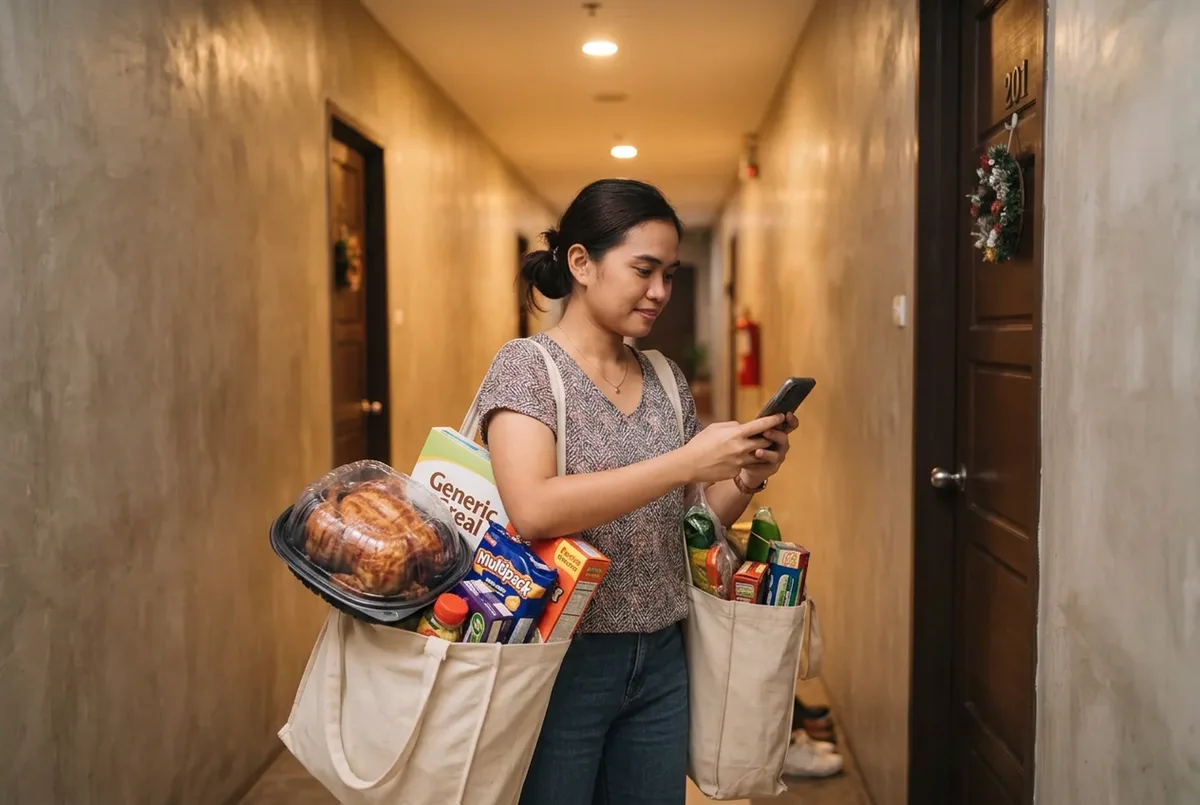
Pasabuy (from pa-, a request marker, plus the English “buy”) is asking someone who is already going to a store to buy something for you. The shopper purchases on your behalf, you pay the item price plus a small service fee, and you collect the goods when they get back. It is errand-sharing, Filipino style.
The sibling term pabiliworks the same way for quick local errands (“pabili ng suka sa tindahan”), while pasabuy usually implies the bigger trip: the membership warehouse, the mall, the palengke, even abroad.
How pasabuy became a side hustle
Pasabuy started as a favor between officemates and neighbors. It became a business the moment people realized the trip itself has value. An S&R or Landers run requires a membership card, a car, and half a day - things many households do not have. A weekly palengke trip at 5am gets the best fish - a trip most condo dwellers will never make. So the person already making the trip started taking orders.
During the lockdown years this exploded into a full informal industry: pasabuy pages for warehouse groceries, Divisoria hauls, pasalubong from Japan, viral bakery items with two-hour lines. Today a consistent pasabuy operator in one condo building can turn a weekly errand into real weekly income, with zero puhunan beyond the trip they were making anyway.
How pasabuy pricing works
There are two accepted models, and good operators state theirs upfront:
- Per-item service fee. The item at receipt price plus a flat fee, commonly ₱20 to ₱50 per item or per order depending on bulk and distance. Transparent, and the receipt settles all doubts.
- Marked-up price. One all-in price per item with the fee baked in. Simpler for viral items and palengke goods where receipts are impractical - buyers accept the markup as the price of not making the trip.
Either way, the fee is paying for the trip, the queue, the membership card, and the carrying - not for the goods. Nobody begrudges it. That is the deal.
The trust rules
Pasabuy runs on fronted money in one direction or the other, so both sides carry risk: shoppers who buy first can get ghosted on pickup, and buyers who pay first depend on the shopper delivering. The informal rulebook:
- Down payment or full payment upfrontfor big-ticket or perishable orders, so the shopper is never left holding someone's abandoned ₱3,000 of groceries.
- Receipts shown when charging receipt-plus-fee.
- Payments verified in the app, not by screenshot. Fake GCash screenshots are a real scam wave - here is how to verify GCash payments properly.
- Clear cutoff and pickup time, announced before the trip, so orders do not trickle in while the shopper is at checkout.
The classic pasabuy failure is the joy reserver: someone who orders, then vanishes at collection time. In group chats there is no accountability for this. Read how sellers deal with bogus buyers before fronting money for strangers.
Pasabuy as a marketplace feature
Suki Neighbors supports pasabuy natively, because the mechanics map perfectly onto pre-orders:
- 1
The shopper posts the run
“S&R run Saturday” goes up as a listing with a cutoff time. Everyone in the community sees it - no buried group-chat post. - 2
Neighbors reserve before the cutoff
Orders land in the shopper's queue with names and quantities. The shopper can require a down payment through order rules, so every reservation is a real one. - 3
One trip, tracked handoffs
After the run, each order moves through statuses to delivered, with payment marked paid or unpaid per buyer. No mental ledger, no seen-zoned follow-ups.
Because communities are locked to one building or barangay, the buyer who ghosts a pickup is not a stranger - they are a neighbor with a reputation attached. That alone fixes most of what makes group-chat pasabuy painful.
Common questions
What does pasabuy mean?
Pasabuy means asking someone who is already going to a store to buy something for you. The shopper purchases the item on your behalf, and you pay the item price plus a small service fee, or an agreed marked-up price. It comes from the Filipino request prefix 'pa-' plus the English word 'buy'.
How much is a typical pasabuy fee?
Commonly ₱20 to ₱50 per item or per order, depending on bulk, distance, and difficulty. Some operators instead quote one marked-up all-in price with the fee included. The fee pays for the trip, the queue, and often a membership card (like S&R or Landers) that the buyer does not have.
What is the difference between pasabuy and pabili?
Both mean buying on someone's behalf. Pabili usually refers to quick, small local errands, like sending someone to the corner store. Pasabuy usually implies a bigger planned trip: a warehouse store, the mall, the palengke, or even shopping abroad, with a service fee expected.
Is pasabuy a legitimate business?
Yes. It is a personal shopping service, one of the lowest-capital side hustles in the Philippines because the operator monetizes a trip they were already making. Consistent operators treat it like a business: clear fees, receipts, down payments for large orders, and fixed cutoff and pickup times.
How does pasabuy work on Suki Neighbors?
A shopper posts the planned store run as a pre-order listing with a cutoff time. Neighbors in the community reserve items before the cutoff, and the shopper can require down payments through order rules. Orders are tracked through statuses to delivery, with per-buyer paid or unpaid marking, all with zero commission.